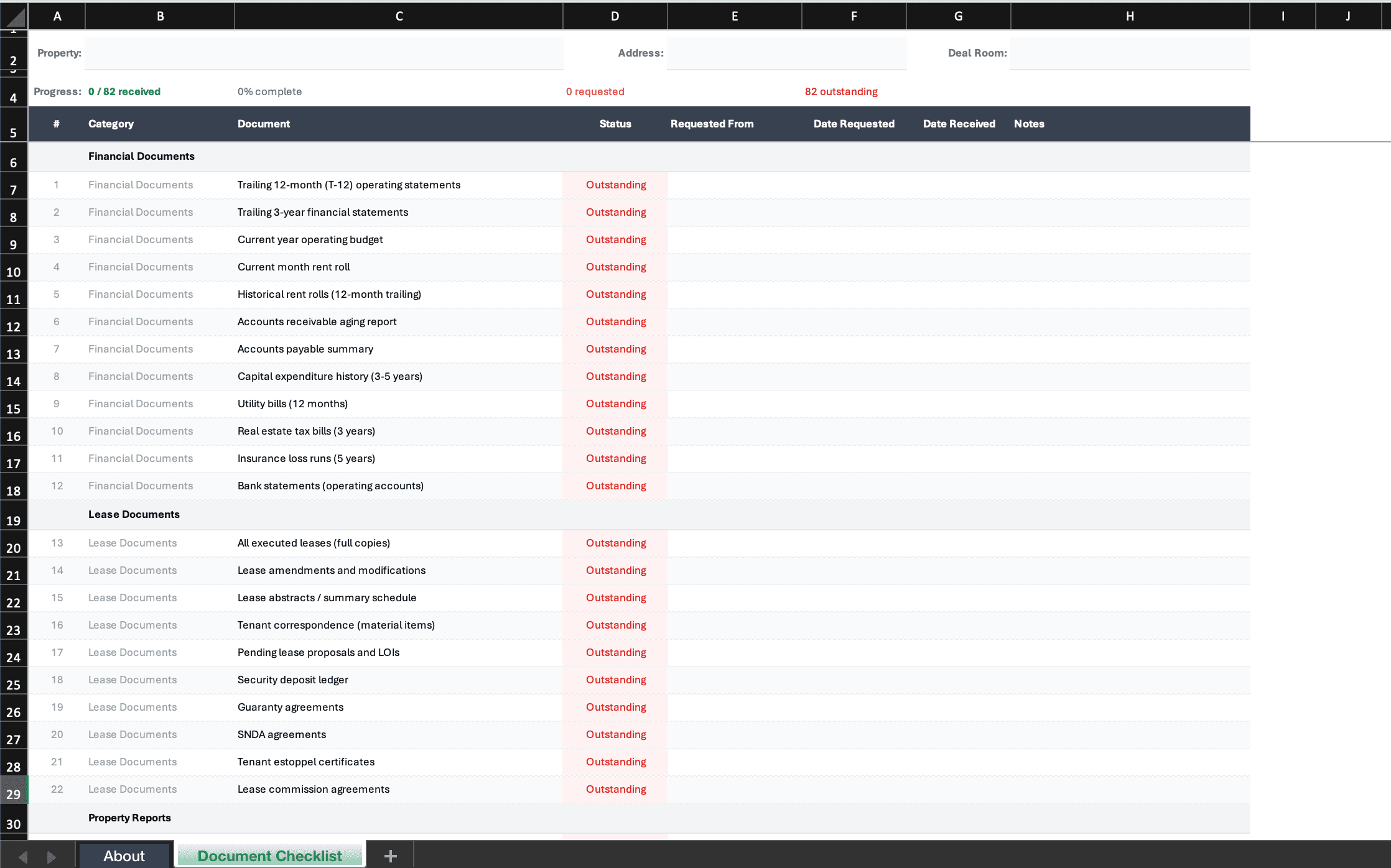
What's included
This template contains 82 documents organized across 10 categories, covering every document you need to collect or produce during a CRE acquisition. Each document row includes a status dropdown (Received, Requested, Outstanding, N/A), a source field (seller, broker, title company, lender, etc.), notes column, and date received. A progress tracker at the top shows how many documents have been collected out of the total applicable items.
Use this checklist in two ways: as a document request list when acquiring a property (tracking what the seller has delivered and what remains outstanding), or as an organizational framework when building a data room for lenders, equity partners, or disposition buyers.
Document categories
Financial Documents
Trailing financial statements (T-12, T-3), operating budgets, accounts receivable and payable aging, and historical capital expenditure records.
Rent Roll and Leasing
Current rent roll, executed leases, lease amendments, tenant correspondence, and concession schedules.
Physical Property
Property condition assessment, roof reports, elevator inspection certificates, HVAC maintenance records, and capital improvement history.
Environmental
Phase I ESA, Phase II reports (if applicable), asbestos and lead surveys, underground storage tank documentation, and remediation records.
Legal and Title
Title commitment, title policy, survey, easement agreements, CC&Rs, and any pending litigation documentation.
Insurance
Current insurance policies, certificates of insurance, loss history reports, and flood zone determination.
Tax Records
Property tax bills, assessment notices, tax appeal history, and any abatement or TIF documentation.
Zoning and Entitlements
Zoning confirmation letter, certificate of occupancy, building permits, site plan approvals, and any variance or conditional use permits.
Operations
Property management agreement, vendor contracts, utility bills, staffing roster, and tenant improvement work orders.
Entity and Organizational
Operating agreement, articles of organization, good standing certificates, and organizational chart for the ownership entity.
How to manage your deal room
Start by reviewing the full document list and marking any items as N/A that do not apply to your specific transaction. Then send the Requested items to the seller or broker as your initial document request list. As documents come in, update the status to Received and add the date. Review the progress tracker weekly to identify what remains outstanding and follow up accordingly.
Consistent file naming matters. Use a convention like “[Category]-[Document Name]-[Date]” to keep files organized whether they live in a shared drive, virtual data room, or deal management platform.
For teams using MotionCRE, the deal workspace file room replaces both this checklist and your shared drive. Upload documents directly to each deal, organize by category, and track what has been received alongside your DD tasks and deal financials.
Pair this with our multifamily due diligence checklist or commercial due diligence checklist to track both the documents and the work items. When you reach closing, the CRE closing checklist covers everything from PSA execution through post-close.
Frequently asked questions
What documents should be in a CRE deal room?
A complete CRE deal room should include financial statements, rent rolls, leases, property condition reports, environmental assessments, title documents, survey, insurance certificates, tax records, and entity documents. The exact list depends on the asset type and transaction stage, but most acquisitions require 60 to 100 documents across these categories.
How do you organize a real estate data room?
Organize a real estate data room by document category, not by date or source. Standard categories include Financial, Leasing, Physical Property, Environmental, Legal and Title, Insurance, Tax, Zoning, Operations, and Entity Documents. Within each category, use consistent file naming and track the status of every document so you know what has been received and what remains outstanding.
What documents do buyers request during due diligence?
Buyers typically request trailing financial statements (T-12 and T-3), current rent roll, all executed leases, property condition assessment, Phase I environmental report, title commitment, survey, insurance loss history, tax bills, utility bills, vendor contracts, and capital expenditure history. Lenders will request many of the same documents plus appraisal and environmental insurance.
Download this template
Enter your details below to download.
Excel format · No account required